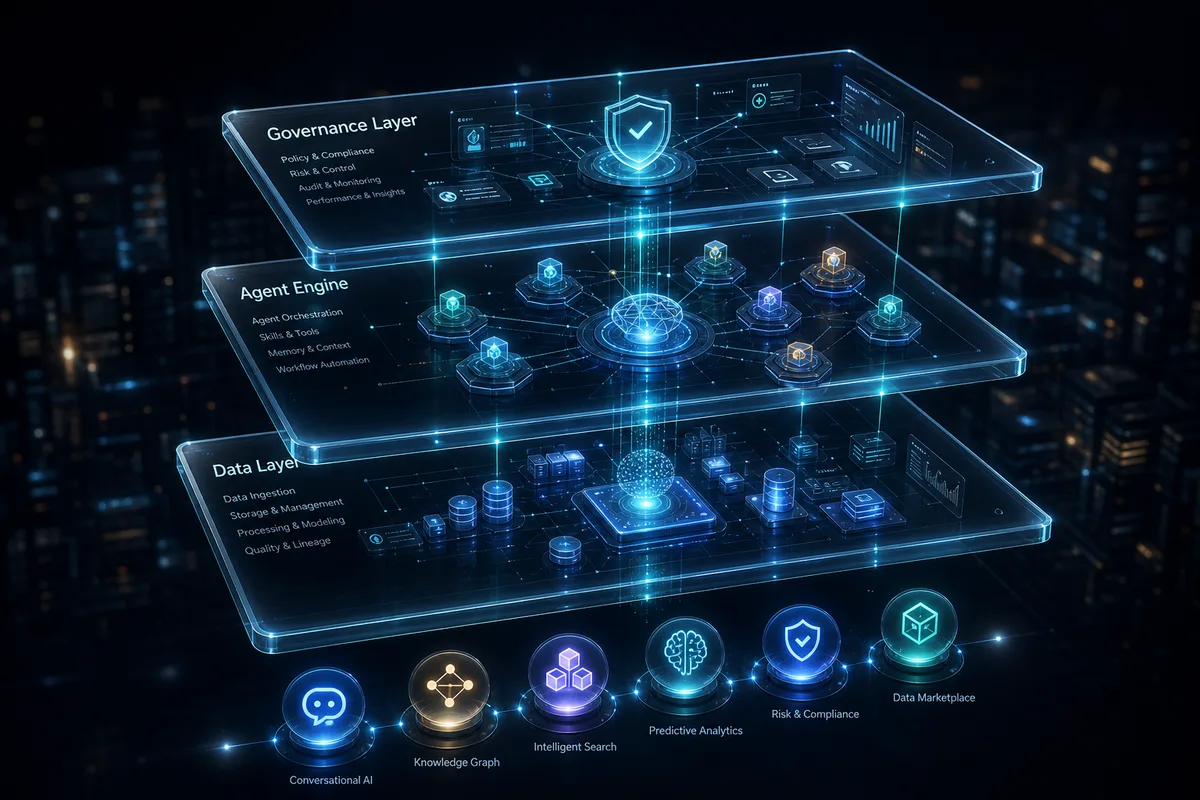
Many enterprise ML projects stall at PoC: models perform well on test sets but cannot embed in real business processes. The cause is usually fragmentation — data pipelines, model serving, business feedback, and human review operate in silos without a system layer to operationalize models.
Four Steps from Model to Operational System
- Embed in workflows — model outputs trigger agent actions, not dashboard displays
- Establish feedback — business outcomes (success/failure/correction) flow back to the model layer
- Human-in-the-loop — high-risk decisions retain human review; agents assist, not replace
- Continuous optimization — operational data drives model iteration for a business closed loop
87%
ML PoCs that never reach production (industry estimate)
4×
Model iteration speed increase when embedded in agent workflows
ROI
Comes from operational loops — not lab metrics
“
"The model is the engine, agents are the drivetrain, business processes are the road — all three are essential."